


The Ultimate Guide to Identifying Real vs. Fake Saffron: Secrets from the Farm
Saffron is more than just a spice; it is a legacy of the earth, often called "Red Gold" because of its incredible value and the painstaking labor required to harvest it. For centuries, families have passed down the secrets of this vibrant flower, using it to heal, to celebrate, and to bring a royal touch to the simplest of meals. However, because it is so precious, the world is unfortunately filled with clever imitations. If you have ever wondered how to identify real saffron or worried that the expensive jar in your pantry might be a fake, you are not alone. As someone who has lived and breathed the scent of saffron fields for decades at Herati Saffron, I want to welcome you into our family circle and share the honest truth about what you are buying.
When we talk about fake saffron vs real saffron, we are not just talking about a difference in flavor. Real saffron comes from the delicate stigmas of the Crocus sativus flower, and each thread is a tiny powerhouse of antioxidants and unique aromatic compounds. Fake versions, which are often made from dyed corn silk, safflower, or even shredded plastic, offer none of these benefits. In fact, some of the dyes used to make these fakes look real can be harmful to your health. My goal today is to give you the confidence of a master spice merchant, so you never have to guess again. By the end of this guide, you will know every trick in the book for identifying pure saffron and why Herati Saffron is the only choice for those who refuse to compromise on quality.
The Great Saffron Scam: What is Actually in That Jar?
Before we dive into the tests, we must understand the enemy. The most common way people get scammed is by purchasing "saffron" that is actually another plant entirely. Safflower is a frequent culprit; while it is a lovely plant in its own right, it lacks the potent aroma and medicinal properties of true saffron. Other scammers use corn silk or coconut fibers, which are dried and dyed with artificial red colors to mimic the look of the real thing. In the worst cases, unscrupulous sellers have even been known to use fine shavings of colored plastic or gelatin.
Another subtle way you might be overpaying is for "weighted" saffron. Since saffron is sold by weight, some producers will soak the threads in water, honey, or oil to make them heavier. This means you are paying a premium price for moisture rather than the spice itself. This is why learning how to identify real saffron starts with your eyes and your nose, even before you open the package. True saffron should never feel sticky or oily, and it should never have a uniform, perfect red color throughout the entire jar. At Herati Saffron, we ensure our threads are perfectly dried and untainted, giving you the full value of every milligram.
[Visual Suggestion 1: A high-resolution macro photograph showing a side-by-side comparison of real saffron threads (trumpet-shaped, deep red) next to safflower or corn silk (flat, uniform color, different shape). Label the real saffron "The Herati Standard" and the other "The Imitation."]
The Saffron Water Test: The Gold Standard of Authenticity
If there is only one test you ever perform, let it be the saffron water test. This is the most reliable way to expose a fake because it relies on the natural chemistry of the crocin—the compound responsible for saffron's color. Artificial dyes behave very differently in water than natural saffron pigments do. To perform this test correctly, you need a clear glass of cold water. This is often called the saffron cold water test because cold water allows the reaction to happen slowly enough for you to see the details.
Take two or three strands of your spice and drop them into the water. Now, watch closely. If the water turns a bright red or dark orange almost instantly, you are looking at a fake. Artificial dyes are designed to release their color immediately. Real saffron, however, is shy. It will sit in the water for a few moments before slowly releasing a soft, golden-yellow hue. Over the course of 10 to 15 minutes, the water will become a vibrant, clear gold. Most importantly, the strands themselves should remain deep red. If you are using Herati Saffron, you will see this beautiful, steady transformation every time.
[Visual Suggestion 2: A series of three photos showing the saffron cold water test at 1 minute, 5 minutes, and 15 minutes. The real saffron glass should show a slow, golden "bleed," while the fake glass shows a messy, instant red cloud.]
The Secret Baking Soda Test
For those who want to be absolutely certain, there is a "secret" method that many professional spice tasters use: the saffron baking soda test. This is a simple chemical reaction that is nearly impossible for fakes to mimic. Because real saffron is slightly acidic and contains specific natural pigments, it reacts in a very particular way when mixed with an alkaline substance like baking soda.
To try this at home, mix a small pinch of baking soda with a little bit of water in a cup. Then, add a few strands of your saffron. If the saffron is real, the mixture will turn a distinct, bright yellow. If it is fake—especially if it is made with common red dyes or safflower—the mixture will often turn a dull red, or it may not change color at all. This saffron baking soda test is one of the most definitive ways to prove you have the real thing, as it bypasses the visual tricks that scammers use to fool the naked eye. We invite you to try this with Herati Saffron; our purity is our pride.
The Touch and Rub Test: Feeling the Quality
Sometimes, your fingers are the best tools for identifying pure saffron. This is a test you can do even in a market before you buy a large quantity. Take a few strands and rub them between two wet fingers for a few seconds. Real saffron is incredibly potent. As you rub, your skin should be stained a bright, persistent yellow or orange. If the color is red or if it washes off with a simple splash of water, it is likely an artificial dye.
Furthermore, pay attention to the texture. Real saffron is a bit brittle but should feel "clean." If it feels greasy, it has likely been treated with oil to add weight. If it feels sticky, it might have been sprayed with sugar water. These are all signs that you are being scammed. A master mentor once told me that real saffron should feel like a dry autumn leaf—delicate, yet full of hidden life. This is exactly the texture we maintain at Herati Saffron through our expert drying process.
[Visual Suggestion 3: An image of a hand with two fingers showing the bright yellow stain left behind by rubbing real saffron, compared to a hand with a red or non-existent stain from a fake.]
The Scent and Flavor: Managing Your Expectations
One of the biggest mistakes people make when buying saffron is expecting it to taste "sweet" because of its beautiful, floral aroma. In reality, what does real saffron taste like? It is a complex, sophisticated flavor that is more savory than sweet. When you first smell a jar of high-quality Herati Saffron, you should be greeted by a scent that many describe as a mixture of honey and fresh hay. It is a warm, sunny aroma that fills the room. Some even find notes of tobacco or leather in the most potent varieties.
However, the taste is a different story. If you place a strand on your tongue, you will notice a distinct bitterness. This bitterness is a sign of picrocrocin, the compound that gives saffron its medicinal value and its unique culinary profile. In a finished dish, this bitterness disappears, transforming into a rich, umami-like depth that enhances everything from rice to seafood. It is often compared to the earthy, musky flavor of truffles. If your "saffron" tastes sweet or metallic, it is a clear sign of a fake or a very low-quality harvest. At Herati Saffron, we harvest only the finest Negin grade to ensure this profile is perfectly balanced.
How to Properly Use Saffron: The Master's Method
Now that you know you have the real deal, you must treat it with the respect it deserves. Many people waste their expensive spice by simply tossing the threads into a boiling pot. This is a tragedy! To get the most out of your "Red Gold," you must learn how to bloom saffron correctly. Think of blooming as waking up the spice. By gently encouraging the threads to release their oils and pigments before they hit the main dish, you ensure that every single strand provides maximum flavor and color.
The best way to steep saffron is actually a subject of much debate among chefs, but my family has always sworn by the "Ice and Fire" method. First, gently grind your threads in a small mortar and pestle with a tiny pinch of sugar. The sugar acts as an abrasive, helping to break down the tough fibers of the stigma. Then, instead of hot water, place a single ice cube on top of the ground saffron. As the ice slowly melts at room temperature, it coaxes out the most vibrant, crimson-gold color you have ever seen. If you are in a hurry, warm (but never boiling) water or milk works too. Let it sit for at least 15 to 20 minutes. This liquid—this "liquid gold"—is what you add to your dish, usually near the end of the cooking process to preserve the delicate aromatics.
[Visual Suggestion 4: An infographic titled "The 3 Steps to Saffron Perfection." Step 1: Grind (show mortar/pestle). Step 2: Bloom (show ice cube melting over saffron). Step 3: Infuse (show the vibrant liquid being added to a dish).]
When considering how to use saffron threads in your daily cooking, remember that a little goes a long way. For a family-sized portion of paella or risotto, you only need about 20 to 30 threads (roughly a large pinch). Using too much can actually make a dish taste overly medicinal or bitter. It is about balance and elegance, not sheer volume.
Beyond the Basics: Understanding Saffron Grades and Varieties
To truly master the world of saffron, you must understand that not all "real" saffron is created equal. Even when you are certain you have avoided a fake, the quality can vary wildly based on which part of the flower was harvested. In the professional world, we categorize saffron into grades based on the concentration of its active compounds: crocin (color), picrocrocin (flavor), and safranal (aroma).
The most prized grade is Sargol (in Persian) or Negin. These are the very tips of the saffron stigmas—the deep, crimson-red parts that contain the highest concentration of essential oils. When you are identifying pure saffron, look for threads that are entirely red with no yellow or white "tails." These tails are called the "style," and while they are a natural part of the plant, they have no culinary value. Some sellers leave them attached to add weight, but at Herati Saffron, we carefully trim our Negin grade to ensure you are only paying for the most potent part of the flower.
[Visual Suggestion 5: A diagram of a saffron flower stigma. Label the top red part "Negin/Sargol (Premium Quality)" and the lower yellow/white part "Style (Low Quality/Weight Filler)."]
Below Negin, you will find grades like Pushal, which includes some of the yellow style attached to the red stigma. While this is still "real" saffron, it is less potent, meaning you will need to use more of it to achieve the same result. Finally, there is Bunch saffron (or Dasteh), where the entire long threads are tied together. This is beautiful and traditional, but it contains the most yellow style and is generally considered a lower grade for serious cooking. Herati Saffron specializes in the highest Negin grade, so you always get the best.
The Secret to Longevity: How to Store Your Saffron
You have done the research, you have performed the saffron water test, and you have finally secured a jar of high-quality Herati Saffron. Now, the question is: how do you keep it that way? Saffron is incredibly sensitive to three things: light, heat, and moisture. If you leave your saffron on a sunny windowsill or near a hot stove, it will lose its potency in a matter of weeks. The delicate safranal—the compound responsible for that "honey and hay" aroma—is highly volatile and will literally evaporate if not protected.
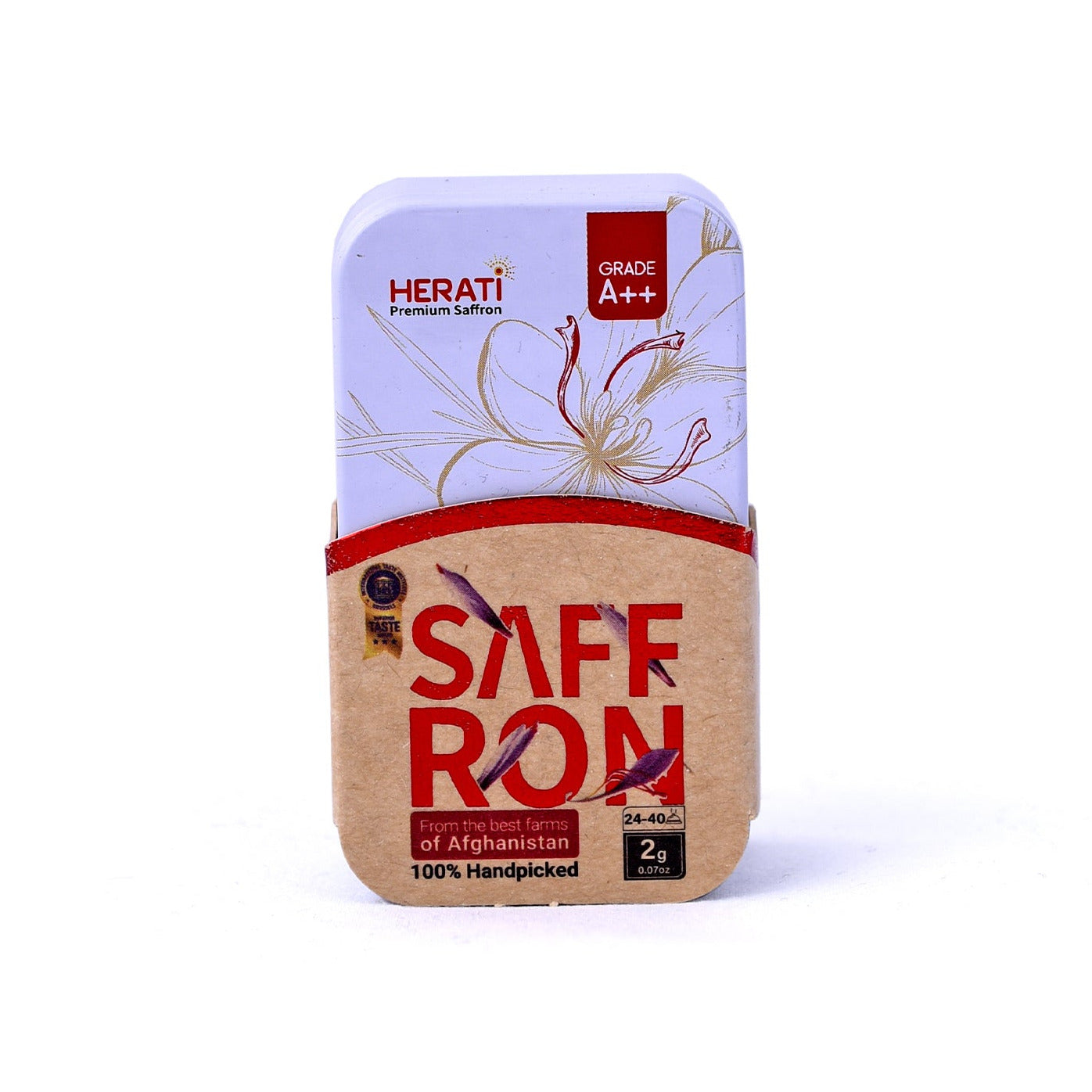
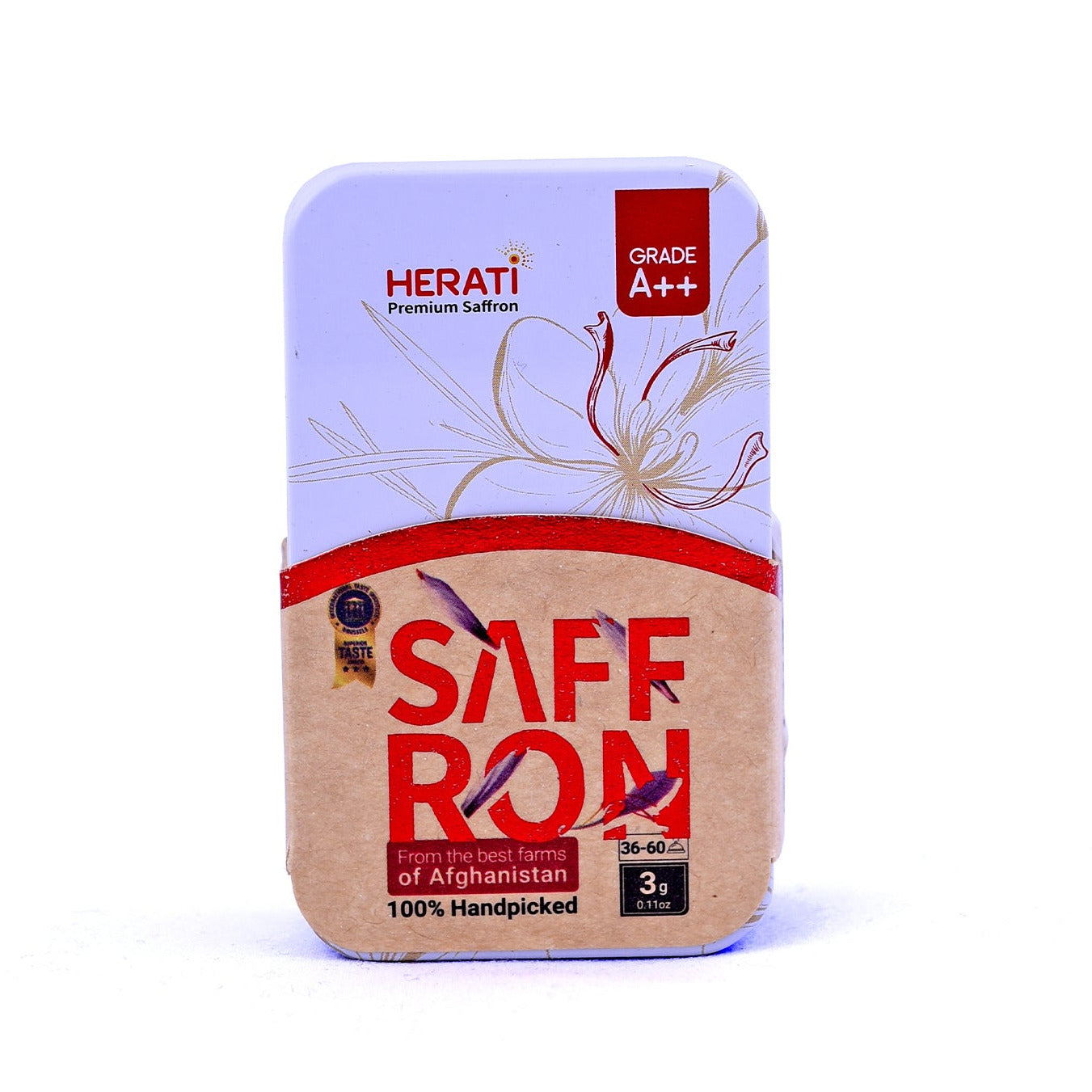
The best way to store your saffron is in a cool, dark place, ideally in an airtight container. Our 5.0g Airtight Reusable Aroma-Lock Tins are specifically designed for this purpose. They block out all light and create a perfect seal to keep moisture out. If you live in a particularly humid climate, you might even consider adding a small food-grade desiccant pack to your storage area. When stored correctly, high-quality saffron can maintain its peak flavor and medicinal properties for up to two or three years. However, as a mentor, I always tell my students: saffron is meant to be used and celebrated, not hidden away forever!
[Internal Link Suggestions:
The Labor of Love: Why Saffron Costs What It Does
To truly appreciate why we must be so careful about fake saffron vs real saffron, we must look at the harvest. Every single thread of Herati Saffron is harvested by hand. There are no machines that can delicately pluck the stigmas from the Crocus sativus without damaging them. The flowers only bloom for a few weeks each year, and they must be picked at dawn, before the sun gets too high and begins to wilt the petals.
It takes roughly 150 flowers to produce just one gram of dried saffron. That means for a single pound of saffron, nearly 75,000 flowers must be hand-picked and processed. This is why we are so passionate about our mission. In Afghanistan, this harvest provides vital, dignified work for thousands of women. When you understand the human effort behind every crimson thread, the importance of identifying pure saffron becomes about more than just a recipe—it becomes about honoring the hands that fed the world.
Where to Buy Authentic Saffron Without Getting Scammed
Finding a source you can trust is the final step in your saffron journey. When you are looking for where to buy, avoid any seller that refuses to show you the origin of their spice. You want to look for "ISO 3632" certification, which is the international standard for saffron purity and strength. Also, be wary of "bargain" saffron. If the price seems too good to be true, it almost certainly is. The labor required to harvest 75,000 flowers just to produce one pound of saffron means the price will always reflect that effort.
At Herati Saffron, we take this responsibility personally. We aren't just a business; we are a family-owned farm that controls every single step of the process—from planting the bulbs in the fertile Afghan soil to hand-packing the tins that arrive at your door. By cutting out the middlemen, we can offer the world's highest-rated saffron at a price that is fair to both you and the 5,000 hardworking women who help us harvest it. When you buy from us, you aren't just getting a spice; you are supporting a mission of dignity and excellence.
[Internal Link Suggestions:
Frequently Asked Questions About Saffron Authenticity
As I travel and speak with people about our farm, I often hear the same questions. I want to address a few of them here to ensure you have a complete understanding.
Q: Can I use the saffron water test with hot water?
A: You can, but it happens much faster. The saffron cold water test is better for beginners because the slow release of color makes it much easier to spot artificial dyes. In hot water, even real saffron will release color quickly, which can be confusing.
Q: Is "ground saffron" always a scam?
A: Not always, but it is much riskier. It is very easy for unscrupulous sellers to mix real ground saffron with turmeric, paprika, or even dyed flour. Unless you trust the brand implicitly, I always recommend buying whole threads and grinding them yourself. This way, you can perform the saffron baking soda test on the whole threads first.
Q: Why does my saffron smell like plastic?
A: If your saffron has a strong chemical or plastic smell, it is almost certainly a fake made from synthetic materials. Real saffron should always smell organic—like a meadow in the sun.
[Visual Suggestion 6: A "Saffron Cheat Sheet" table. Columns: Test Name, What to Do, Real Result, Fake Result. This serves as a quick-reference guide for the reader.]
Conclusion: Welcome to the Saffron Family
Learning how to identify real saffron is the first step in a lifelong culinary adventure. Once you have tasted the difference that pure, ethically sourced saffron makes, there is no going back. You now have the tools to protect yourself from scams and the knowledge to use this "Red Gold" like a master chef. Whether you are performing the saffron water test at home or practicing the best way to steep saffron for your next dinner party, remember that you are part of a tradition that spans thousands of years.
We invite you to explore the rest of our site, try our family recipes, and experience the unparalleled quality of Herati Saffron for yourself. Your kitchen is about to become a lot more vibrant, and we are honored to be a part of that transformation. Welcome to the family.
